
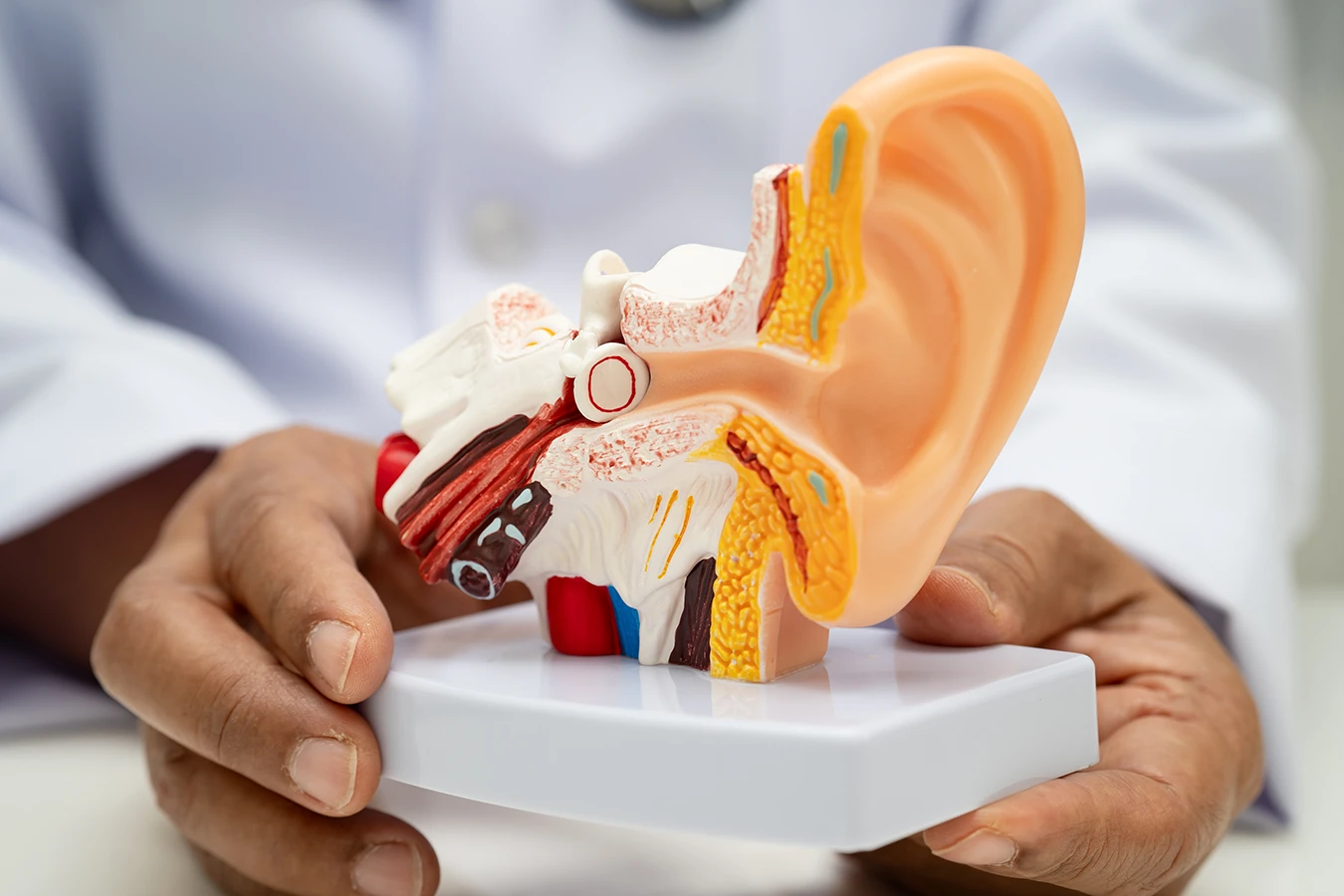
Hearing loss is a complex condition affecting about 1 in 8 people in the U.S. alone.1 Many of these individuals experience mixed hearing loss, which is a combination of both sensorineural hearing loss (SNHL) and conductive hearing loss (CHL).
In this article, we will provide a detailed overview of what mixed hearing loss is, common symptoms of the condition, and how it is diagnosed and treated.
What is Mixed Hearing Loss?
Mixed hearing loss is a type of hearing impairment that involves both sensorineural hearing loss and conductive hearing loss at the same time:
- Sensorineural hearing loss (SNHL): is a result of damage to the inner ear or auditory nerve that affects sound processing, typically caused by aging, noise exposure, and more.
- Conductive hearing loss (CHL): occurs when sound waves are blocked or cannot travel efficiently through the outer and middle ear, caused by injuries, earwax impaction, fluid buildup, and more.
To put it simply, mixed hearing loss means there is a problem with how the inner ear processes sound and a problem with how sound travels through the ear.
Sound normally moves through the outer ear and middle ear (the conductive pathway) before reaching the inner ear, where sound waves are converted into signals and sent to the brain (the sensorineural pathway).
In mixed hearing loss, both of these pathways are affected.
What Are the Symptoms of Mixed Hearing Loss?
Symptoms of mixed hearing loss may affect one ear (unilateral) or both ears (bilateral) and can develop gradually or suddenly, depending on the underlying cause. In some cases, symptoms may fluctuate, especially if conditions like ear infections are involved.
Some of the most common symptoms of mixed hearing loss include:
- Difficulty hearing soft sounds
- Trouble understanding conversations, especially in noisy environments
- Things sound muffled or distorted
- Needing to turn up the TV or radio louder than others prefer
- Frequently asking people to repeat themselves or mishearing words
- A feeling of fullness or pressure in the ear
- Tinnitus (ringing, buzzing, or humming in the ears)
- Your own voice sounds different to you
If you or a loved one is experiencing any of these symptoms, schedule a hearing test with a qualified specialist to get started on treatment as early as possible.
What Causes Mixed Hearing Loss?
Mixed hearing loss is caused by a combination of damage to the inner ear (sensorineural) as well as to the outer/middle ear (conductive). Because two different parts of the hearing system are affected, identifying both causes is essential for accurate diagnosis and effective treatment.
Below, we break down the most common causes of each component of mixed hearing loss:
Common Causes of Sensorineural Hearing Loss
Sensorineural hearing loss (SNHL) occurs when the inner ear and/or the auditory nerve are damaged. This type of hearing loss is usually permanent and affects the clarity of sounds, even when they are loud enough.
Common causes of SNHL include:
- Age-related hearing loss (presbycusis) occurs naturally with age and develops gradually over time
- Noise-induced hearing loss is a result of prolonged or repeated exposure to loud sounds
- Genetic or hereditary factors can cause hearing loss to be present at birth (congenital) or develop later in life (acquired)
- Certain health conditions can damage the inner ear over time
- Ototoxic hearing loss is caused by medications that damage the inner ear
- Head trauma affecting the inner ear or auditory nerve
Common Causes of Conductive Hearing Loss
Conductive hearing loss (CHL) occurs when sound waves are blocked from effectively traveling through the outer or middle ear to the inner ear. Unlike sensorineural hearing loss, many conductive causes are temporary and/or medically reversible.
Common causes of CHL include:
- Earwax (cerumen) buildup blocking the ear canal
- Ear infections in the outer or middle ear
- Perforated or damaged eardrum
- Abnormal bone growth in the middle ear (otosclerosis)
- Abnormal skin growth in the middle ear (cholesteatoma)
In some cases of mixed hearing loss, the conductive issue may be temporary and treatable. However, the sensorineural component is often permanent but treatable with solutions like hearing aids.
Diagnosing each contributing factor is essential in determining the most effective treatment plan.
How is Mixed Hearing Loss Diagnosed?
The only way to diagnose mixed hearing loss is with a comprehensive hearing exam conducted by a qualified professional. The process typically includes a physical examination of your ears to check for visible issues such as earwax buildup or damage to the eardrum that could contribute to conductive hearing loss.
Your specialist will also ask about your medical history, noise exposure, medications, sudden or gradual changes in hearing, and more. They will then conduct a thorough hearing screening, which can include a pure-tone test, speech testing, and other specialized assessments.
These tests allow your specialist to determine if your hearing loss is conductive, sensorineural, or mixed. Once the diagnosis is confirmed, they can create a personalized treatment plan tailored to your needs.
How is Mixed Hearing Loss Treated?
Treatment for mixed hearing loss focuses on addressing both the conductive and sensorineural components of the condition. Because these involve different parts of the hearing system, management is often multi-step and tailored to the individual’s specific diagnosis, lifestyle, and overall hearing goals.
Treating the Conductive Component First
When possible, treatment for mixed hearing loss usually begins by addressing the conductive component first. Improving sound transmission through the outer or middle ear can significantly enhance overall hearing and make other treatments more effective.
Common conductive hearing loss treatment options include:
- Removal of earwax or foreign objects from the ear canal
- Medication, such as antibiotics or steroids, to treat infections or inflammation
- Management of middle-ear fluid, including monitoring, medication, or minor procedures
- Surgical intervention, such as repair of a perforated eardrum, treatment for otosclerosis, or removal of a cholesteatoma
Once the conductive component is addressed, the residual sensorineural hearing loss can be more accurately assessed and treated accordingly.
Treating Sensorineural Hearing Loss
Damage to the inner ear or auditory nerve is irreversible, meaning sensorineural hearing loss is permanent. However, SNHL is often treatable.
Treatment options for sensorineural hearing loss may include:
- Hearing aids, custom programmed to compensate for both reduced volume and reduced clarity
- Advanced hearing aid features, such as directional microphones, noise reduction, and speech-enhancement technology
- Wireless hearing aid accessories, including TV streamers or remote microphones
Ongoing Care and Follow-Up
Because hearing loss can change over time, regular follow-up appointments are important. Ongoing monitoring ensures that hearing technology remains properly adjusted and that any changes are identified early.
With the right combination of care and hearing technology, many people with mixed hearing loss experience significant improvements in daily communication and long-term quality of life.
Schedule a Hearing Test at an Audibel Clinic Near You
Mixed hearing loss is a common condition that can significantly impact daily quality of life. Early diagnosis and personalized treatment are key to achieving the best possible outcome. If you or a loved one has experienced any changes in your hearing, the experts at Audibel are here to help. Our hearing specialists will determine your unique hearing needs and develop the personalized treatment plan you deserve.
Find an Audibel clinic near you to schedule a hearing exam today.
References
- Quick statistics about hearing, balance, & dizziness. (2024d, September 20). NIDCD. https://www.nidcd.nih.gov/health/statistics/quick-statistics-hearing






Have a question or Comment?