
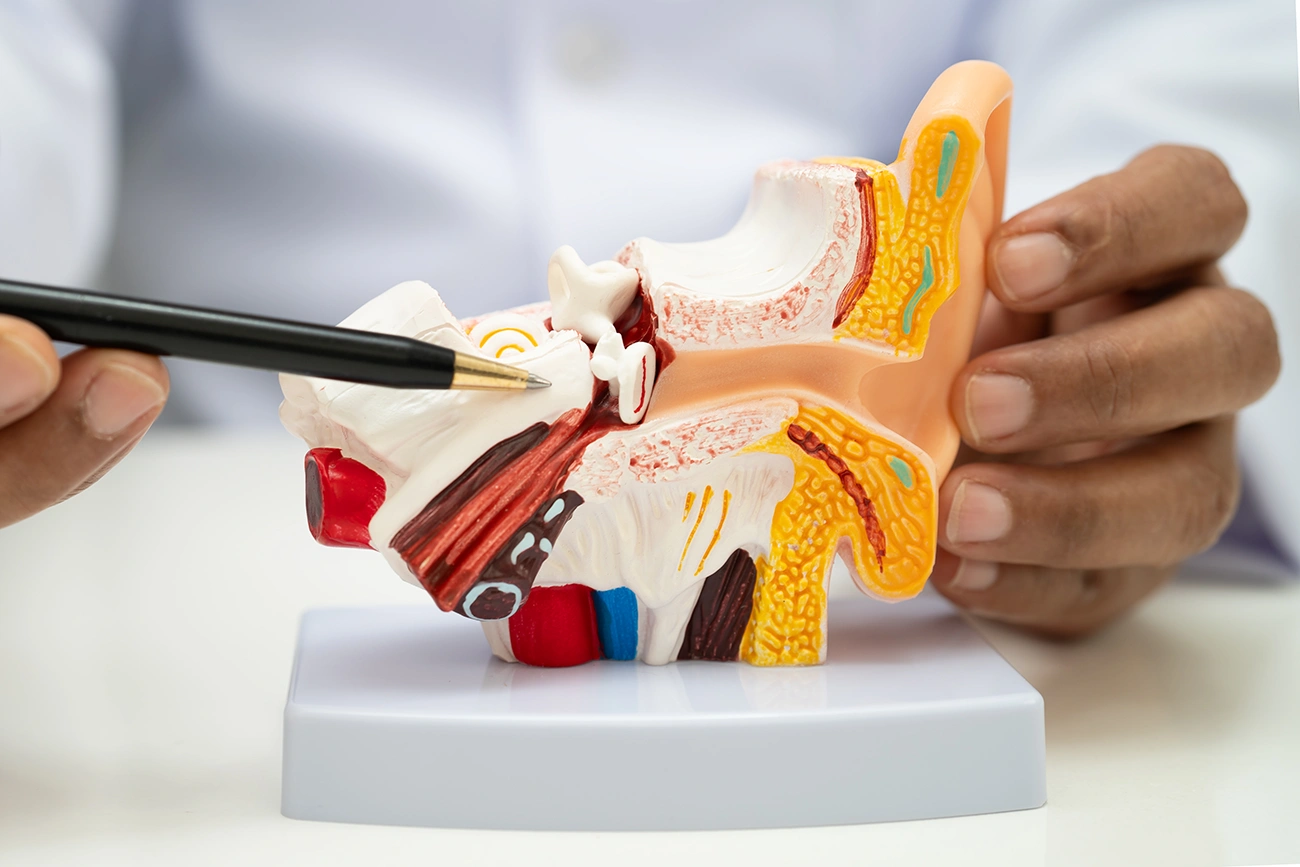
Nonsyndromic hearing loss (NSHL) is the most common type of hereditary hearing loss. This genetic condition is typically caused by mutations in specific genes that impact how the inner ear processes sound. Understanding this genetic condition can help individuals and families make informed decisions about their long-term hearing health care.
In this guide, we provide a detailed overview of what nonsyndromic hearing loss is, including its symptoms, causes, and treatment options.
Jump Ahead:
What is Nonsyndromic Hearing Loss? (NSHL)
Nonsyndromic hearing loss (NSHL) is a type of hereditary hearing loss that accounts for the majority of inherited cases. Hereditary hearing loss, also called genetic hearing loss, is caused by changes, or mutations, in certain genes that are passed down from one or both parents. These genetic variations can affect how the inner ear develops or how sound signals are transmitted to the brain.
Around 70% of all cases of hereditary hearing loss are nonsyndromic, meaning hearing loss is the only symptom, and it isn’t linked to any other medical condition.1 The remaining 30% of inherited cases are syndromic, meaning hearing loss occurs as a symptom of a broader genetic condition.1
Symptoms of Nonsyndromic Hearing Loss
The symptoms of nonsyndromic hearing loss (NSHL) can vary depending on factors such as the severity and whether one or both ears are affected. NSHL can be present at birth, or it can develop later in life. It can affect one or both ears and may range in severity from mild to profound degrees of hearing loss. In many cases, symptoms of NSHL appear gradually over time, making them easy to overlook at first.
Key symptoms of nonsyndromic hearing loss include:
- Hearing loss: This is the main symptom of NSHL and can range from mild to profound, affecting one ear (unilateral) or both ears (bilateral).
- Tinnitus: A ringing, buzzing, or humming sound in one or both of the ears.
- Feeling pressure: A sensation of fullness, pressure, or a blockage in the ear.
- Difficulty understanding speech: This can be a subtle symptom at first, but especially challenging when speech is quiet, far away, or in a loud environment.
- Difficulty hearing specific frequencies: Hearing loss may be more evident at different high, middle, or low frequencies.
It’s also important to note that symptoms of nonsyndromic hearing loss can manifest at birth, during childhood, or later in life. In children, signs of NSHL may include delayed speech development, unclear speech, inattentiveness, and more.
Because nonsyndromic hearing loss isn’t linked to other symptoms or health conditions, a comprehensive hearing test is often the only way to confirm its presence and determine how severe it is.
What Causes Nonsyndromic Hearing Loss?
NSHL can have several underlying causes, but genetics play the most significant role. Most cases of nonsyndromic hearing loss result from changes, or mutations, in specific genes that are responsible for hearing function.
Genetic Causes
Researchers have identified over 90 genes where mutations cause nonsyndromic hearing loss.3 These mutations can be inherited from one or both parents, depending on the inheritance pattern (dominant, recessive, X-linked, or mitochondrial).
One of the most common genes linked to nonsyndromic hearing loss is the GJB2 gene, which produces the Connexin 26 protein (gap junction protein). This protein is essential for healthy cochlear function, which is part of the inner ear responsible for hearing. When the GJB2 gene doesn’t work properly, the inner ear’s ability to transmit sound signals to the brain is disrupted.2
Other genes, such as GJB3, GJB6, SLC26A4, STRC, and many more, can also be linked to nonsyndromic hearing loss.3
Environmental Factors
The genetic factors that cause nonsyndromic hearing loss can also make people more vulnerable to environmental factors that accelerate or result in hearing loss over time.
Contributing factors of NSHL include:
- Aging: Age-related hearing loss (presbycusis) refers to gradual hearing loss that occurs as part of the natural aging process. Experts believe that anywhere from 35-55% of age-related hearing loss has genetic influences.4
- Loud noise exposure: Repeated exposure to loud sounds and/or environments can cause noise-induced hearing loss (NIHL).
- Ototoxic medication: Certain antibiotics, chemotherapy drugs, or high doses of aspirin can be ototoxic, meaning they harm the inner ear, resulting in hearing loss.
While these environmental factors don’t cause nonsyndromic hearing loss, they can worsen existing hearing issues or cause new ones in genetically predisposed individuals.
Nonsyndromic Hearing Loss Treatment Options
While it’s generally not preventable, NSHL can be effectively managed with the right care and support. For most people with nonsyndromic hearing loss, hearing aids are the primary treatment option. Modern prescription hearing aids can be custom-programmed to match a person’s unique hearing profile, making a significant difference in both hearing ability and daily quality of life.
Because hearing loss can change over time, annual hearing tests are recommended to track any changes and fine-tune hearing devices as needed. Regular follow-up care with a hearing care provider not only helps maintain hearing aid performance but also supports long-term hearing health and overall quality of life.
Schedule a Hearing Exam at an Audibel Clinic Near You
Nonsyndromic hearing loss is one of the most common forms of genetic hearing loss. If you suspect that you or a loved one may be experiencing hearing loss, scheduling a hearing exam is a crucial first step.
Find an Audibel hearing clinic near you today to safeguard your hearing health and quality of life for years to come.
References
- Young, A., & Ng, M. (2023, April 17). Genetic hearing loss. StatPearls – NCBI Bookshelf. https://www.ncbi.nlm.nih.gov/books/NBK580517/
- GJB2 gene: MedlinePlus Genetics. (n.d.). https://medlineplus.gov/genetics/gene/gjb2/
- Nonsyndromic hearing loss: MedlinePlus Genetics. (n.d.). https://medlineplus.gov/genetics/condition/nonsyndromic-hearing-loss/#causes
- Gates, G. A., Couropmitree, N. N., & Myers, R. H. (1999). Genetic Associations in Age-Related Hearing Thresholds. Archives of Otolaryngology – Head and Neck Surgery, 125(6), 654. https://doi.org/10.1001/archotol.125.6.654






Have a question or Comment?