
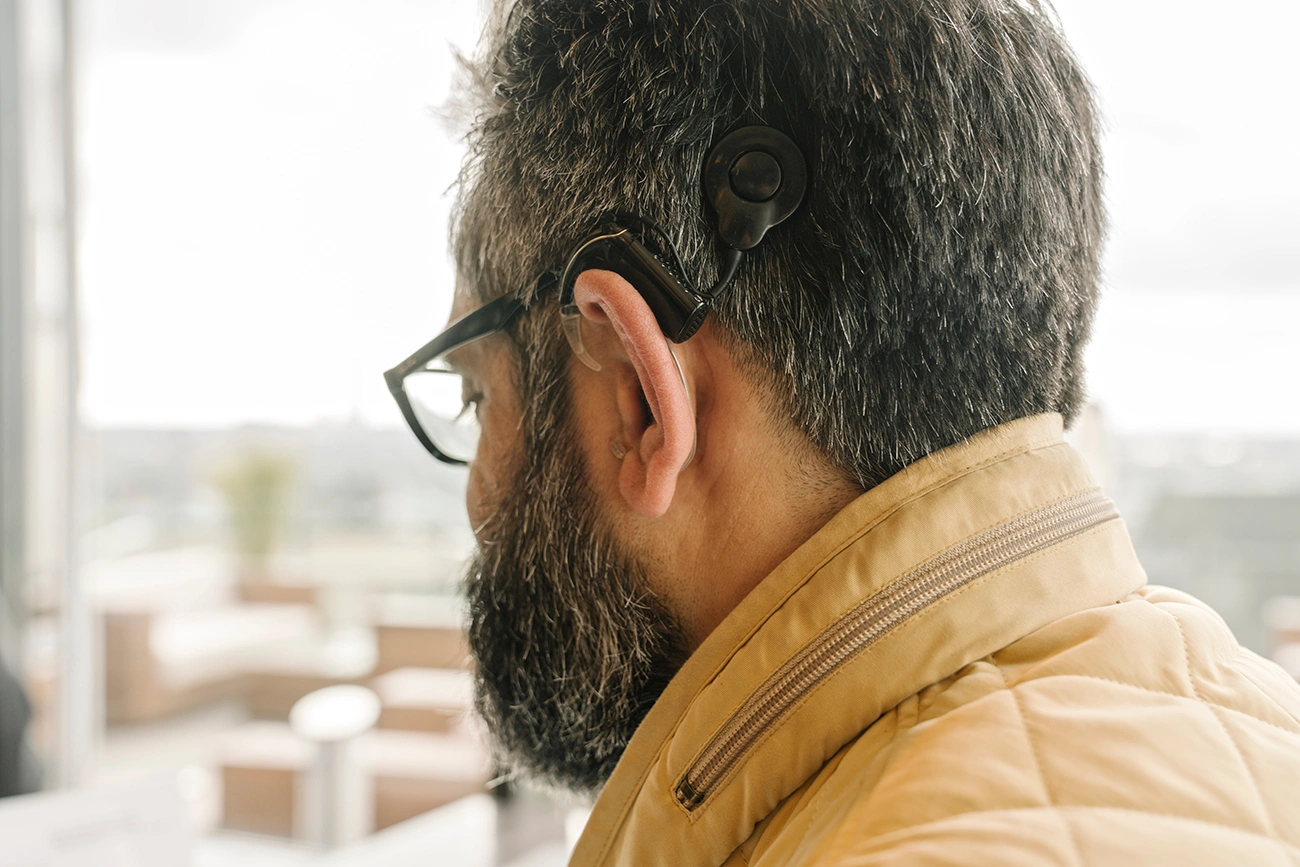
Bone conduction hearing aids are a type of hearing device designed for people who don’t benefit from traditional hearing aids (air-conduction hearing aids). Instead of amplifying sound waves into the ear canal, bone conductive devices transmit sound vibrations directly to the inner ear (cochlea).
Bone conduction hearing aids can be an effective solution for many people with conductive or mixed hearing loss, profound single-sided loss, and other conditions that make traditional hearing devices ineffective.
Read on to learn more about bone conduction hearing aids, including how they work and the types of hearing conditions they are designed to treat.
How Do Bone Conduction Hearing Aids Work?

Bone conduction hearing aids are specialized devices designed to send vibrations through the mastoid bone of the skull, directly to the cochlea (inner ear). Unlike traditional air-conduction hearing aids, which amplify and send sound through the ear canal and middle ear, bone conduction devices bypass these structures entirely and deliver sound straight to the inner ear.
How Bone Conduction Hearing Aids Work:
- Sound Capture: An external microphone worn behind the ear picks up sound.
- Vibrations: An external transducer converts the sound into vibrations.
- Direct Transmission: These vibrations travel through the mastoid bone (skull) directly to the inner ear (cochlea), bypassing the outer ear (ear canal) and middle ear (eardrum and ossicles).
- Hearing: The inner ear turns these vibrations into electrical signals that are sent to the brain and interpreted as traditional sound waves.
All bone conduction hearing aids use the same kind of technology to deliver sound vibrations to the inner ear. However, there are different types of bone conduction devices that can be recommended for specific hearing conditions and needs.
Types of Bone Conduction Hearing Aids
The main types of bone conduction hearing aids available today include non-surgical options (BCHA) and surgically implanted devices (BAHA). Both types also come in different styles.
Below are the main types and styles of bone conduction hearing aids:
Non-Surgical Bone Conduction Hearing Aids (BCHA)
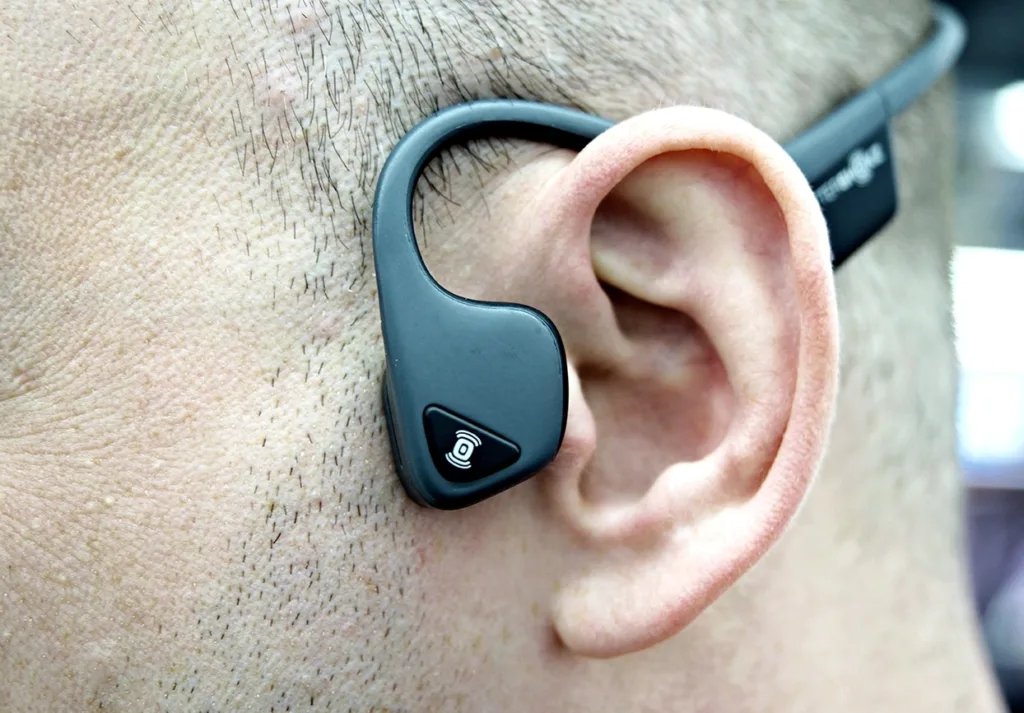
Non-surgical bone conduction hearing aids (BCHA) are worn externally on the surface of the skin and transmit sound vibrations through the bone behind the ear (mastoid bone). Non-surgical BCHA devices are generally ideal for children, people who cannot undergo surgery, or anyone wanting to try bone conduction hearing devices before committing to an implant.
Styles of non-surgical bone conduction hearing aids include:
- Headband and Softband Systems: These bone conduction systems use a comfortable headband to hold the external sound transducer against the mastoid bone.
- SoundArc Devices: SoundArc bone conduction systems use a flexible band worn around the back of the head. They provide a more discreet alternative to traditional softbands.
- Adhesive Bone Conduction Devices: These devices use a small adhesive pad placed behind the ear to secure the sound transducer against the mastoid bone. These devices are lightweight, comfortable, and the most discreet non-surgical option.
Surgical Bone-Anchored Hearing Aids (BAHA)
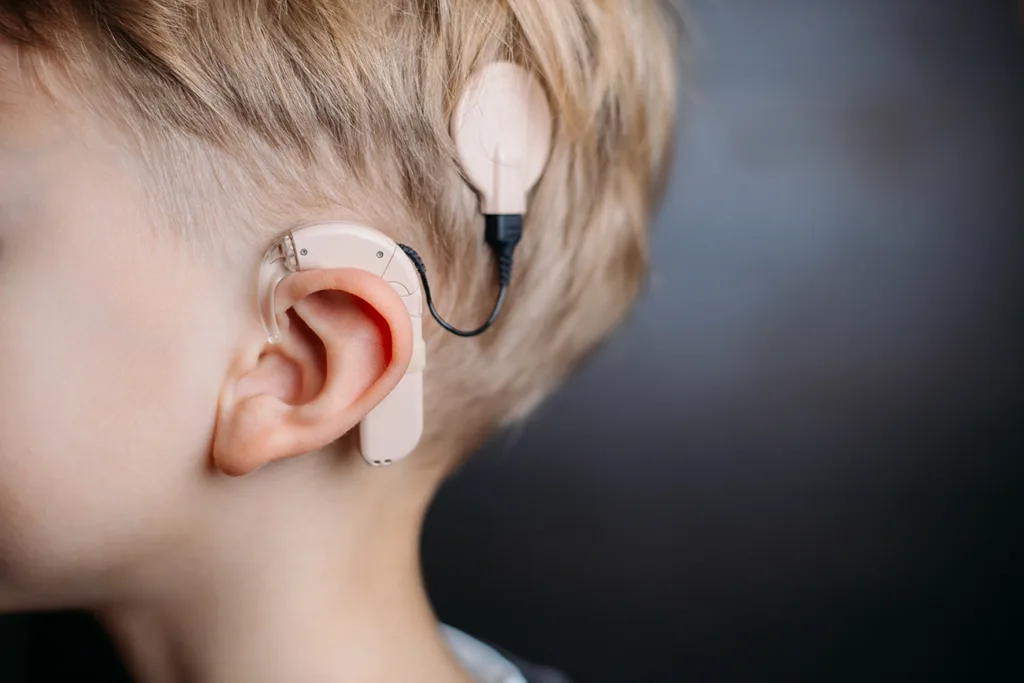
Bone-anchored hearing aids (BAHA) are a titanium implant that is surgically anchored to the mastoid bone. BAHA devices are considered medical devices and are recommended as a permanent hearing loss solution.
Styles of surgical bone-anchored hearing aids include:
- Percutaneous Bone-Anchored Systems: These use a titanium implant with a small abutment that passes through the skin. The external transducer snaps onto this abutment, allowing vibrations to pass through the mastoid bone easily. This design requires consistent cleaning of the skin around the abutment.
- Passive Transcutaneous (Magnetic) Systems: These systems use a magnet implanted under the skin to hold the external transducer in place, allowing vibrations to pass through the skin layer to the bone. This design is slightly less invasive and requires less daily maintenance compared to percutaneous models.
Who is a Candidate for Bone Conduction Hearing Aids?
Bone conduction hearing aids are typically recommended for people who cannot benefit from traditional hearing devices. They are generally an effective solution for people who have certain types of hearing loss and/or specific ear conditions that prevent sound from traveling normally through the ear canal or middle ear. Because bone conduction bypasses these structures and stimulates the cochlea directly, these devices can be an effective option for a variety of hearing conditions.
Below are the most common candidates for bone conduction hearing devices:
People with Conductive or Mixed Hearing Loss
People with conductive hearing loss or mixed hearing loss are often strong candidates for conductive hearing aids.
- Conductive hearing loss occurs when sound cannot pass effectively through the outer ear (ear canal) or middle ear (eardrum and ossicles). However, the inner ear (cochlea) functions normally.
- Mixed hearing loss occurs when a person has both conductive and sensorineural hearing loss. This means they have a problem with the outer/middle ear and some degree of inner-ear (cochlear) damage.
Bone conduction devices bypass the problem area and deliver sound vibrations straight to the inner ear. This allows individuals with these types of hearing loss to hear even when the ear canal or middle ear isn’t functioning properly.
People with Single-Sided Deafness (SSD)
Bone conduction hearing devices are frequently recommended for people with single-sided deafness (SSD). Single-sided deafness is when one ear has profound or total hearing loss, while the other ear has normal or near-normal hearing.
The microphone on a bone conductive device captures sound on the person’s deaf side and transmits the vibrations through the skull to the inner ear on the hearing side. The healthy inner ear processes these vibrations as sound, improving overall hearing and awareness.
People Who Cannot Wear Traditional Hearing Aids
Bone conduction may be appropriate for people who cannot wear traditional hearing aids. Some individuals have adequate cochlear function but cannot comfortably wear in-the-ear (ITE) or behind-the-ear (BTE) devices due to:
- Ongoing ear drainage or chronic infections
- Narrow, closed, or otherwise altered ear canals
- Skin sensitivities or chronic irritation from traditional ear molds
- Anatomical differences affecting ear shape
- Discomfort or inability to maintain a proper fit
Because bone conduction hearing devices sit outside the ear canal, they avoid these issues entirely.
Find the Personalized Hearing Care You Deserve at Audibel
Bone conduction hearing aids can offer an effective solution for people who cannot benefit from traditional air-conduction devices or who need an alternative way to access sound. If you suspect that you or a loved one may be experiencing hearing loss, the Audibel specialists are here to help. We can evaluate your hearing and help you find the best hearing solutions for your needs, lifestyle, and budget. Find an Audibel clinic near you to take the first step toward getting the personalized hearing care you deserve.







Have a question or Comment?