

Healthy aging starts long before you notice it happening. Managing hearing loss alongside other healthy lifestyle choices is key to preserving vitality, mobility, and independence as we age.
Untreated hearing loss is linked to an increased risk of falls, depression, cognitive decline, and dementia in older adults. Timely hearing care is essential for minimizing all of these risks.
In this guide, we explore why hearing care is essential for healthy aging, along with practical steps to protect your auditory health and overall well-being now and for years to come.
The Impact of Untreated Hearing Loss on Healthy Aging
Roughly 25% of adults over the age of 60 have hearing loss.1 Meanwhile, this statistic more than doubles to 55% by age 75.2 While hearing loss is common with age, its effects shouldn’t be considered an unavoidable part of getting older. Left untreated, hearing loss can disrupt communication, social connection, physical activity, and everyday quality of life—all critical pillars of healthy aging.
Below, we take a closer look at the potential impact untreated hearing loss can have on healthy aging for older adults:
Cognitive Health
Hearing loss can have a substantial impact on brain functions and cognitive health, especially for older adults:
- Increased Cognitive Load: When hearing is difficult, the brain has to work harder to interpret speech and fill in gaps in conversation. Over time, this added cognitive effort leaves fewer mental resources available for memory, attention, and other cognitive tasks.
- Brain Tissue Atrophy: Hearing loss can deprive the brain of the auditory stimulation it needs to remain active and healthy. Over time, this lack of stimulation can cause areas of the brain to physically shrink and atrophy. While it’s natural for brain tissue to shrink as we get older, hearing loss can accelerate this shrinkage by an extra cubic centimeter of tissue loss every year.3
- Higher Risk of Dementia: Hearing loss is one of the largest modifiable risk factors for dementia. Even just mild degrees of hearing loss can double the risk, while severe cases of hearing loss can increase the risk of dementia by up to five times.4
Safeguarding cognitive health is a key part of healthy aging. Addressing hearing loss helps combat these effects, supporting an active and engaging lifestyle and long-term brain health.
Social and Emotional Health
Untreated hearing loss can also have a major impact on social and emotional well-being. Difficulty hearing can make everyday interactions more challenging and can even lead to withdrawal from the people and activities that bring meaning and enjoyment to daily life:
- Depression and Anxiety: Untreated hearing loss has been associated with a 50% higher risk of depression and anxiety in older adults.5
- Social Withdrawal: Difficulty communicating and following conversations can make social gatherings frustrating and exhausting. Over time, this may lead to avoiding social activities and spending less time with others, increasing the risk of loneliness and social isolation.
- Loneliness and Isolation: Research shows that people with untreated hearing loss are more likely to experience feelings of loneliness and social isolation.6 Scarier still, loneliness and isolation are also linked to a 50% increase in the risk of dementia in older adults.7
Maintaining strong relationships, social connections, and emotional well-being is an important part of healthy aging. When you can hear and communicate more easily, it becomes easier to stay connected to the people and experiences that make life fulfilling. This is why timely hearing care can have such a direct and meaningful impact on long-term quality of life.
Physical Health
Untreated hearing loss affects far more than just your ears. Research shows a direct connection between hearing loss and poorer physical health, especially in older adults:
- Increased Risk of Falls: Untreated hearing loss is directly linked to a higher risk of falls. Even mild degrees of hearing loss can triple the risk of falls in older adults.8
- Reduced Physical Activity: Research links untreated hearing loss to a more sedentary lifestyle. As social and recreational participation drops, overall physical activity declines, increasing the risk of poor cardiovascular health, reduced strength, lost mobility, and more.9
- Safety Concerns: Hearing is essential for detecting critical safety cues like alarms, sirens, approaching vehicles, or warning shouts. Missing these sounds delays reaction time, significantly increasing the risk of accidents and injuries.
- Decreased Independence: The challenges created by untreated hearing loss can make everyday tasks, communication, and simple errands more difficult to navigate. This may lead to greater reliance on friends, family members, or caregivers and make it harder to maintain a self-sufficient and independent lifestyle.
Prioritizing your hearing health as you age is one of the most effective ways to safeguard your safety, mobility, independence, and overall physical vitality.
Hearing Care Tips That Support Healthy Aging
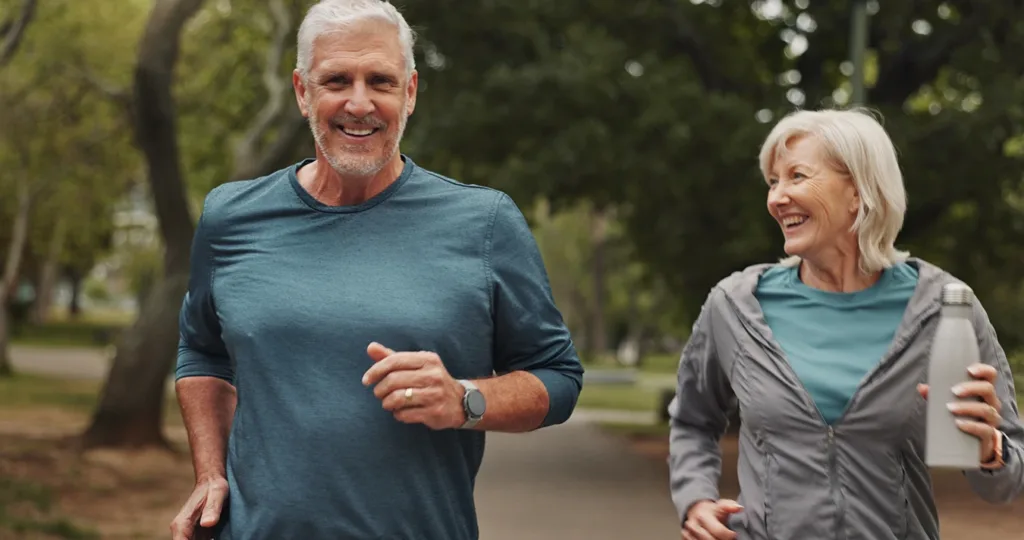
Taking care of your hearing is an important part of taking care of your overall health as you age. Small habits and simple safeguards can make a meaningful difference in maintaining your quality of life and supporting healthy aging.
Below are some proactive strategies to care for both your hearing health and your long-term well-being:
Protect Against Loud Noise
Repeated exposure to loud sounds can damage the delicate structures inside the inner ear and contribute to permanent noise-induced hearing loss (NIHL). This is why it is so important to protect your hearing around loud machinery, during concerts, while using power tools, and while in noisy environments. It is also important to keep personal listening devices at a safe volume and take regular breaks from prolonged listening.
Reducing your exposure to loud noise as much as possible and wearing properly rated hearing protection can help preserve hearing and support healthy aging.
Manage Chronic Health Conditions
Chronic health conditions such as diabetes, high blood pressure, and heart disease can affect hearing health. When these conditions go unmanaged, they can affect blood flow to the inner ear, increasing the risk of permanent hearing loss.
Following a prescribed treatment plan and keeping chronic conditions under control is an important part of protecting your hearing and overall health and supporting healthy aging.
Practice Healthy Lifestyle Habits
There are tons of healthy habits that can support hearing health now and for years to come. Staying physically active, managing stress, getting adequate sleep, and limiting alcohol all support healthy hearing and full-body wellness.
Eating a balanced diet rich in nutrients like omega-3s and antioxidants can also help support overall ear function and resilience against environmental stressors like chronic noise exposure. Avoiding smoking is also important, as smoking can damage blood vessels and may increase the risk of hearing loss.
Schedule Regular Hearing Screenings
Regular hearing screenings can help identify hearing changes before they begin to significantly interfere with everyday life. Hearing loss often develops gradually, so it may be difficult to recognize how much your hearing has changed without a professional evaluation.
Routine screenings establish a baseline and make it easier to track changes in your hearing health over time. Staying up to date with hearing screenings can help protect communication, independence, and quality of life as you age.
Don’t Put Off Hearing Aids
Treating hearing loss sooner rather than later is one of the best ways to support healthy aging. Hearing aids can make it easier to understand conversations, hear important sounds, and stay connected with family, friends, and the world around you. Research has also found that consistent hearing aid use can reduce both the rate of cognitive decline and the likelihood of falls by 50% in at-risk adults.10,11
Protect Your Hearing Health for Life with Audibel
Healthy aging means staying active, connected, independent, and engaged now and for years to come. Your hearing plays an important role in all of these things, which is why taking care of it should be part of your long-term wellness routine.
At Audibel, we’re here to help you protect your hearing at every stage of life. From routine hearing screenings to personalized treatment options, our team can help you understand your hearing health and find the best solutions for your needs, lifestyle, and budget.
Ready to take control of your hearing health? Find an Audibel clinic near you to schedule a hearing evaluation and take an important step toward protecting your long-term hearing health.
References:
- World Health Organization: WHO. (2026d, March 3). Deafness and hearing loss. https://www.who.int/news-room/fact-sheets/detail/deafness-and-hearing-loss
- Quick statistics about hearing, balance, & dizziness. (2024d, September 20). NIDCD. https://www.nidcd.nih.gov/health/statistics/quick-statistics-hearing
- Armstrong, N. M., An, Y., Doshi, J., Erus, G., Ferrucci, L., Davatzikos, C., Deal, J. A., Lin, F. R., & Resnick, S. M. (2019b). Association of midlife hearing impairment with Late-Life Temporal lobe volume Loss. JAMA Otolaryngology–Head & Neck Surgery, 145(9), 794. https://doi.org/10.1001/jamaoto.2019.1610
- Huang, A. R., Jiang, K., Lin, F. R., Deal, J. A., & Reed, N. S. (n.d.-b). Hearing Loss and Dementia Prevalence in Older Adults in the US. JAMA, 329(2), 171. https://doi.org/10.1001/jama.2022.20954
- Dedeoglu, S., Toprak, S. F., Sırma, E., & Dönmezdil, S. (2025b). When Sound Fades: Depression and Anxiety in Adults with Hearing Loss—A Cross-Sectional Study. Healthcare, 13(24), 3320. https://doi.org/10.3390/healthcare13243320
- Shukla, A., Harper, M., Pedersen, E., Goman, A., Suen, J. J., Price, C., Applebaum, J., Hoyer, M., Lin, F. R., & Reed, N. S. (2020b). Hearing Loss, Loneliness, and Social Isolation: A Systematic review. Otolaryngology, 162(5), 622–633. https://doi.org/10.1177/0194599820910377
- Guarnera, J., Yuen, E., & Macpherson, H. (2023). The Impact of loneliness and social isolation on Cognitive aging: A Narrative review. Journal of Alzheimer S Disease Reports, 7(1), 699–714. https://doi.org/10.3233/adr-230011
- Lin, F. R., & Ferrucci, L. (2012b). Hearing loss and falls among older adults in the United States. Archives of Internal Medicine, 172(4), 369. https://doi.org/10.1001/archinternmed.2011.728
- Kuo, P. L., Di, J., Ferrucci, L., & Lin, F. R. (2021). Analysis of Hearing Loss and Physical Activity Among US Adults Aged 60-69 Years. JAMA network open, 4(4), e215484. https://doi.org/10.1001/jamanetworkopen.2021.5484
- Hearing aids slow cognitive decline in people at high risk. (2026, February 6). National Institutes of Health (NIH). https://www.nih.gov/news-events/nih-research-matters/hearing-aids-slow-cognitive-decline-people-high-risk
- Campos, L., Prochazka, A., Anderson, M., Kaizer, A., Foster, C., & Hullar, T. (2023c). Consistent hearing aid use is associated with lower fall prevalence and risk in older adults with hearing loss. Journal of the American Geriatrics Society, 71(10), 3163–3171. https://doi.org/10.1111/jgs.18461






Have a question or Comment?