
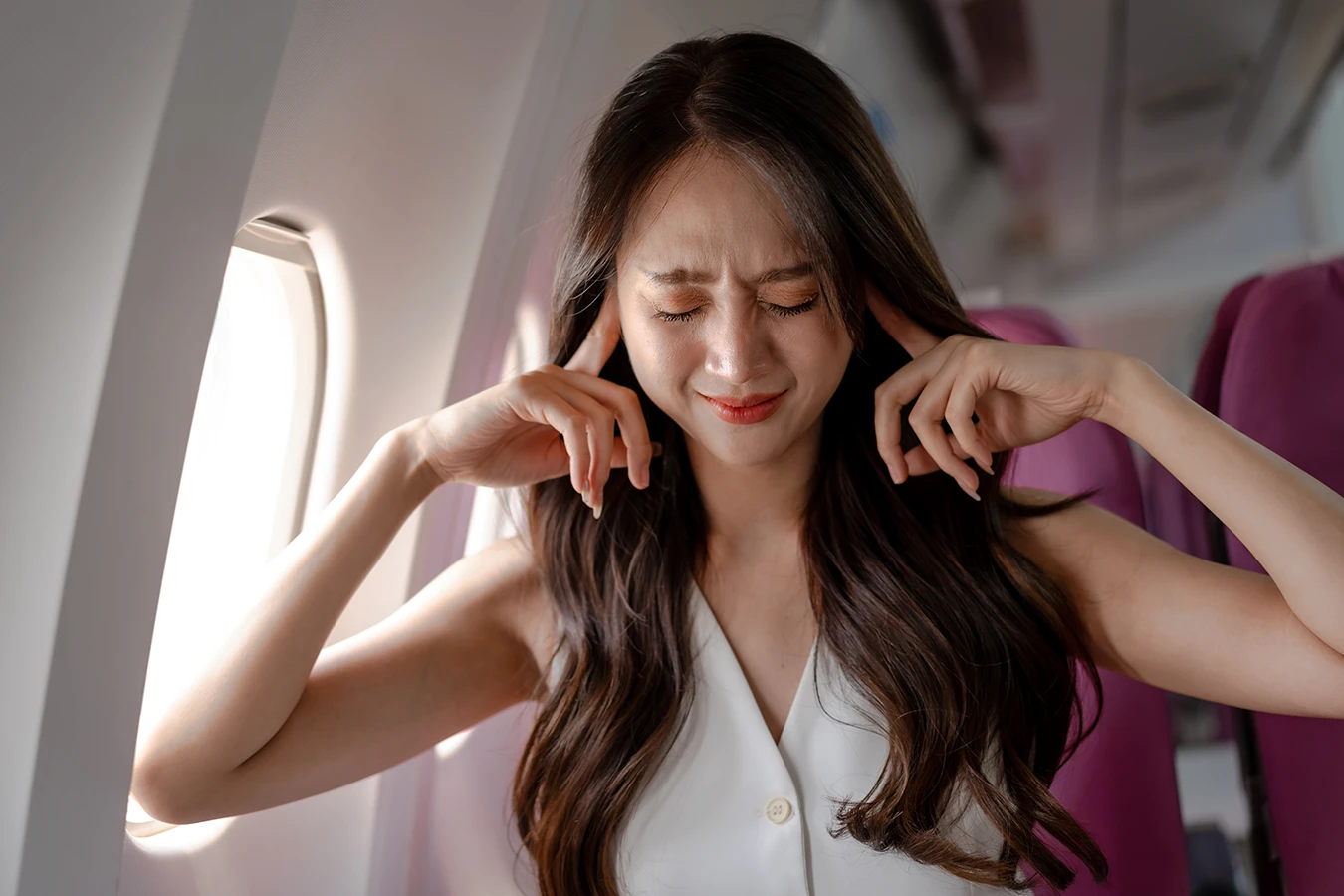
Airplane ear (ear barotrauma) occurs when air pressure outside the ear changes faster than the pressure in your middle ear, putting stress on the eardrum. This commonly occurs during airplane takeoff and landing as the plane ascends and descends, but airplane ear can happen whenever air pressure changes rapidly.
In this guide, we explain what airplane ear is, common symptoms, potential risk factors, and how it can be prevented and treated.
Table of Contents:
What is Airplane Ear? (Ear Barotrauma)
Airplane ear, medically known as ear barotrauma, is when rapid air pressure changes create a mismatch between the pressure in your inner ear and the air outside your body. This rapid change in air pressure can cause temporary ear discomfort, vertigo, and hearing changes that typically resolve on their own.
In severe cases, airplane ear can cause pain, moderate to severe hearing loss, tinnitus, vertigo, and other ear-related symptoms. In rare cases, airplane ear can permanently damage the middle ear or Eustachian tube, which can result in permanent hearing loss.
What Are the Symptoms of Airplane Ear?
The most common symptoms of airplane ear include:
- A clogged or blocked feeling in the ear
- Popping or clicking sounds
- Sharp or aching ear pain
- Muffled hearing or temporary hearing loss
- Nausea and vertigo (dizziness)
- Tinnitus (ringing in the ears)
If you or a loved one has noticed a change in hearing or is experiencing ear discomfort, it’s important to seek timely care.
How Long Does Airplane Ear Usually Last?
Airplane ear usually goes away within a few hours after a flight as the pressure in your middle ear returns to normal. However, how long airplane ear lasts depends on the severity.
For some people, the symptoms of airplane ear may last longer after a flight with significant or repeated pressure changes. In more severe cases, the pressure difference can cause inflammation or injury to the middle ear, which may result in prolonged ear pain, fullness, tinnitus, and other ongoing hearing changes.
If you experience symptoms of airplane ear that are severe, getting worse, or don’t improve after a few days, it’s important to see a healthcare professional. Persistent hearing changes, pain, dizziness, or signs of an ear infection should never be ignored.
What Causes Airplane Ear?
Airplane ear is caused by a mismatch in air pressure between your middle ear and the air pressure outside your body. This pressure imbalance most commonly happens during airplane takeoff and landing, when cabin pressure changes rapidly. However, it can also occur during other activities that involve sudden changes in air pressure, such as scuba diving, riding an elevator, or traveling through high mountain passes.
To understand why airplane ear happens, it’s helpful to know how your ears naturally regulate air pressure:
- Middle Ear: Located behind your eardrum, the middle ear is a small, air-filled space that needs to maintain relatively equal air pressure with the surrounding environment. This allows your eardrum to vibrate properly and transmit sound clearly.
- Eustachian Tubes: These narrow tubes connect your middle ear to the back of your nose and throat. Eustachian tubes help regulate middle ear pressure naturally by periodically opening when you swallow, yawn, or chew, allowing air to move in and out of the middle ear.
Normally, your Eustachian tubes keep the pressure inside your middle ear balanced with the air pressure around you. However, when outside air pressure changes too quickly, these tubes may not be able to equalize the pressure fast enough. This creates a pressure imbalance that puts stress on the eardrum, resulting in airplane ear.
Risk Factors for Airplane Ear
While anyone can experience airplane ear, certain factors can make it harder for your Eustachian tubes to regulate middle ear pressure, increasing your risk of experiencing discomfort, including:
- Nasal Congestion: Colds, sinus infections, allergies, and nasal congestion can cause swelling around the openings of the Eustachian tubes, making it harder for them to open and regulate middle ear pressure.
- Eustachian Tube Dysfunction: Some adults have naturally narrower, misshapen, or malfunctioning Eustachian tubes, a condition known as Eustachian tube dysfunction (ETD). Children are also more prone to airplane ear because their Eustachian tubes are naturally shorter and narrower simply due to their age and development.
- Sleeping During a Flight: When you’re asleep, your body doesn’t perform instinctive pressure-balancing actions like yawning, swallowing, or chewing movements. This is why sleeping during a flight can make you more susceptible to airplane ear.
While these factors can increase your likelihood of experiencing airplane ear, the condition is usually temporary and resolves once the pressure inside and outside your middle ear equalizes.
How Do You Prevent Airplane Ear?

The best way to prevent airplane ear is to help your Eustachian tubes regulate pressure inside your middle ear as the airplane changes altitude. Since most symptoms occur during takeoff and landing, taking a few simple precautions during these parts of your flight can help keep your ears comfortable and prevent painful pressure buildup.
Below, we provide several strategies to prevent airplane ear:
Swallow, Yawn, or Chew Gum During Takeoff and Landing
Swallowing, yawning, and chewing help activate the muscles that open your Eustachian tubes. When these tubes open, air can move in and out of your middle ears, helping equalize pressure around your eardrums. Try chewing gum, sucking on hard candy, drinking water, or yawning frequently during takeoff and descent.
Use Pressure-Regulating Earplugs
Specialized pressure-regulating earplugs, sometimes called filtered or airplane ear earplugs, can help slow the rate at which outside air pressure changes around your eardrums. These earplugs contain special filters designed to gradually regulate airflow into your ear canals during takeoff and landing.
Address Nasal Congestion Before Flying
Colds, sinus infections, and allergies can cause swelling around your Eustachian tubes, making it harder for them to open and regulate pressure. If you have nasal congestion, consider using a saline nasal spray to help clear your nasal passages before a flight.
Some people may also benefit from a decongestant nasal spray or oral decongestant before flying. However, check with a healthcare professional before using these medications, particularly if you have an existing medical condition or take other medications.
Stay Awake During Takeoff and Landing
Sleeping during takeoff or landing can increase your chances of developing airplane ear because your Eustachian tubes open less frequently when you’re asleep. Try to stay awake during these parts of your flight so you can consciously swallow, yawn, or chew gum to help keep your ears clear.
Stay Hydrated
Drink plenty of water before and during the flight. This helps keep nasal membranes moist and encourages more frequent swallowing, supporting pressure balance in the middle ear.
How is Airplane Ear Treated?
Treatment for airplane ear depends on the severity of your symptoms. In most cases, airplane ear is temporary and can be relieved with simple at-home techniques that help open the Eustachian tubes and equalize pressure. However, more severe cases may require medical treatment, particularly if pressure changes cause damage to the eardrum or surrounding structures.
Here is a breakdown of the main treatment options for airplane ear:
Treating Airplane Ear at Home
Most cases of airplane ear resolve on their own within a few hours to a few days as the pressure inside the middle ear equalizes. For mild cases of airplane ear, at-home care may help relieve symptoms, such as:
- Swallowing and Yawning: Swallowing, yawning, and chewing help activate the muscles that open your Eustachian tubes. This allows air to move into or out of your middle ears, helping equalize pressure on both sides of your eardrums.
- The Valsalva Maneuver: Close your mouth and pinch your nostrils shut. Gently try to blow air out through your nose. You may feel or hear a small pop as your Eustachian tubes open. Be careful not to blow too hard, as it can cause eardrum damage. If you experience pain, stop.
- The Toynbee Maneuver: Pinch your nostrils shut and swallow a sip of water to help naturally open your Eustachian tubes and balance middle ear pressure.
If your symptoms of airplane ear are severe, persist, or involve damage to the eardrum, medical intervention may be necessary.
Medical Treatments for Airplane Ear
Although airplane ear usually resolves without medical intervention, certain symptoms warrant an evaluation by a healthcare professional. A medical professional can examine your ears, evaluate your Eustachian tube function, and determine whether additional treatment is needed.
Depending on the severity of airplane ear, medical treatments may include:
- Prescription Medications: If Eustachian tube dysfunction persists, a healthcare professional may recommend medications to address the underlying problem.
- Eardrum Incision (Myringotomy): In more severe cases, a medical specialist may perform a procedure called a myringotomy, which involves making a small incision in the eardrum to release trapped pressure or drain fluid from the middle ear. The incision typically heals on its own.
- Ear Tubes (Tympanostomy Tubes): For people who experience recurring pressure-related ear problems or ongoing Eustachian tube dysfunction, a specialist may recommend tympanostomy tubes. These tiny tubes are placed in the eardrum to allow air to enter the middle ear and help maintain balanced pressure.
- Eardrum Surgery (Tympanoplasty): In rare cases, severe pressure differences can cause the eardrum to rupture. Many small eardrum perforations heal naturally over time. However, larger perforations or those that do not heal may require surgery (tympanoplasty) to be repaired.
Sudden or substantial hearing loss, severe vertigo, or symptoms suggesting a ruptured eardrum should be evaluated by a medical professional urgently rather than waiting for them to resolve on their own. If you frequently experience the symptoms of airplane ear, a specialist can help identify the underlying cause and recommend the best course of action.
Schedule a Hearing Exam at an Audibel Clinic Near You
A comprehensive hearing exam is the best way to identify potential concerns, catch hearing changes early, and ensure you get the care and support you deserve. At Audibel, our hearing care specialists are here to help you take the next step toward better hearing for life.
Find an Audibel clinic near you to schedule a hearing exam today.






Have a question or Comment?