
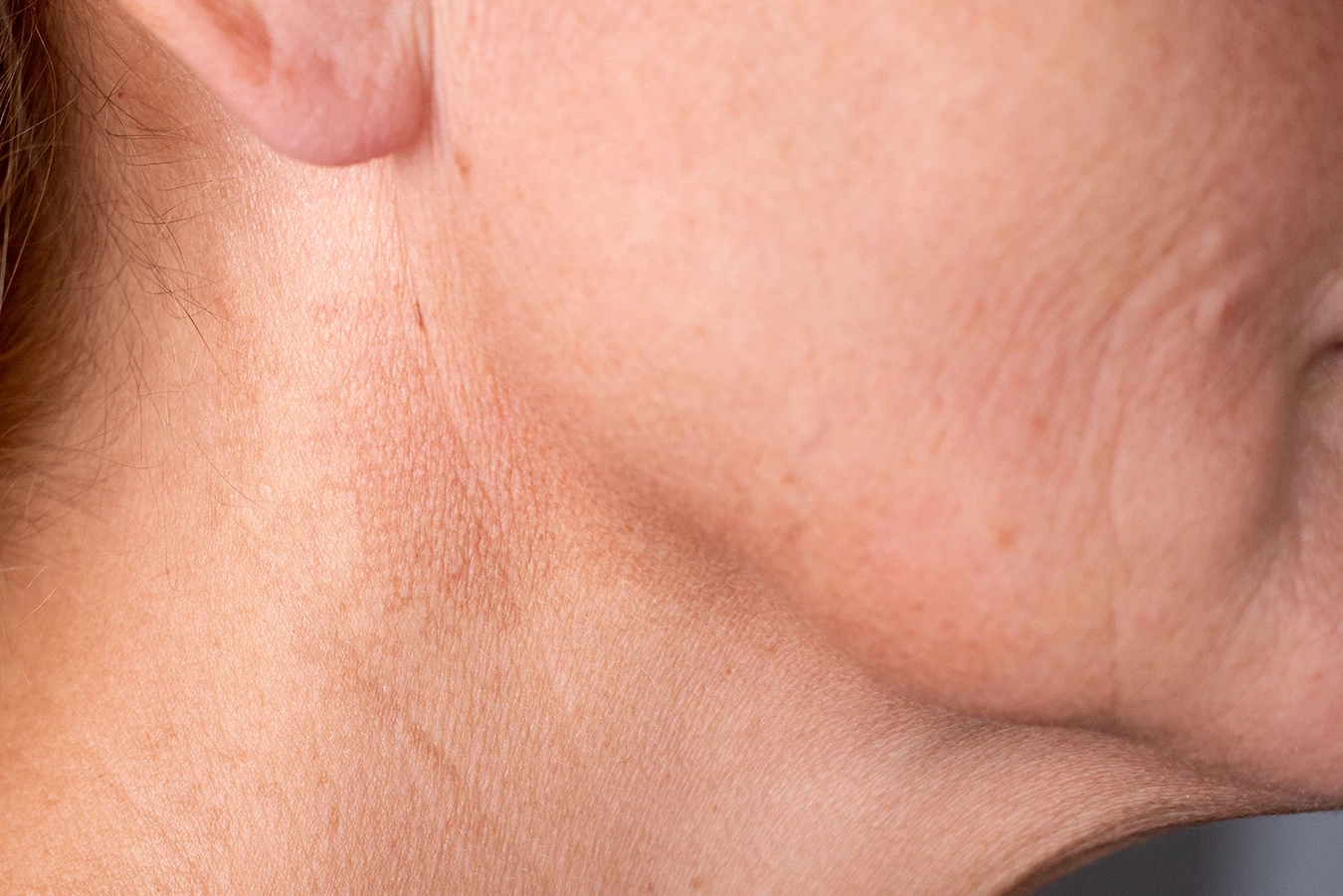
The temporomandibular joints (TMJs) are the hinge-like joints that sit directly in front of your ears and connect your lower jawbone to your skull. Problems involving these joints and the surrounding jaw muscles are referred to as temporomandibular disorders (TMD). TMD is frequently linked to ear-related conditions, with research showing that 85% to 87% of people experience symptoms like tinnitus (ringing in the ears), ear fullness, and even hearing loss.1
In this guide, we explore the symptoms, causes, and treatment options for TMJ-related hearing loss.
What is TMJ Disorder?
The temporomandibular joints (TMJs) are the two joints that connect your lower jawbone to your skull. Located on either side of your head just in front of each ear, these joints work like a hinge, allowing you to speak, yawn, chew, and move your mouth comfortably.
TMJ disorder, more accurately called temporomandibular disorder (TMD), is a group of jaw conditions that affect these joints or the muscles responsible for moving the jaw. TMD can cause pain and change how the jaw moves, but it can also produce symptoms such as ear pain, pressure, fullness, tinnitus, and even hearing loss.
Symptoms of TMJ-Related Hearing Loss:
TMJ can cause a wide range of symptoms in and around the ear, including:
- Ear pain
- Muffled or reduced hearing
- Ear pressure or a feeling of fullness in the ear
- Humming, buzzing, roaring, or ringing in the ears (tinnitus)
- A clicking or popping sound when moving the jaw
Other Symptoms of TMJ Disorder:
Other symptoms of TMJ disorder include:
- Jaw pain or tenderness
- Pain around the ear, face, or temples
- Teeth grinding while asleep
- Difficulty opening your mouth fully
- Jaw stiffness or locking
- Pain or discomfort while chewing
- Changes in the way teeth fit together when biting
Many people notice increased symptoms of TMJ after chewing, yawning, clenching their jaw, or periods of increased stress.
Can TMJ Disorders Cause Hearing Loss?
TMJ disorders can cause temporary hearing changes such as muffled hearing or a feeling of fullness in the ear, and in some cases, it can also contribute to permanent hearing loss.
The temporomandibular joints are located directly in front of the ears on either side of the head. This means the muscles, nerves, and other structures involved in jaw movement are closely connected to the area around the ear. Because of this proximity, problems affecting the jaw can often cause symptoms that are felt in or around the ears, such as a sensation of fullness, tinnitus, and hearing changes. The type of hearing change associated with TMJ dysfunction can vary depending on the structures affected.
In some cases, TMJ-related problems may contribute to conductive hearing loss, sensorineural hearing loss, or mixed hearing loss:
Conductive Hearing Loss
Conductive hearing loss (CHL) occurs when sound cannot travel properly through the outer or middle ear. Inflammation or swelling related to TMJ dysfunction may interfere with sound transmission, potentially causing sounds to seem muffled or less clear.
Conductive hearing changes related to TMJ dysfunction are generally temporary when they result from inflammation or pressure affecting sound transmission.
Sensorineural Hearing Loss
Sensorineural hearing loss (SNHL) develops when there is damage to the inner ear or auditory nerve. While TMJ disorders do not typically cause SNHL directly, factors such as nerve irritation, muscle tension, or changes in pressure around the inner ear may contribute to hearing damage.
Damage to the inner ear or auditory nerve is typically irreversible and results in permanent hearing loss. However, TMJ dysfunction alone is not generally considered a direct cause of permanent sensorineural hearing loss.
Mixed Hearing Loss
Mixed hearing loss occurs when both conductive and sensorineural hearing loss are present. TMJ-related problems may contribute to mixed hearing loss by combining conductive issues (like eustachian tube dysfunction) with sensorineural issues (such as inner-ear damage).
What Causes TMJ-Related Hearing Loss?
The exact reason why TMJ disorders can contribute to symptoms of hearing loss, such as tinnitus or muffled hearing, is not always straightforward or clear. In many cases, several factors may be involved:
Connections Between the Jaw and Ear
The temporomandibular joint and middle ear are connected by ligaments, muscles, and small bones. Because of these anatomical connections, changes in the TMJ may affect the tiny bones or other structures involved in hearing and contribute to symptoms such as muffled hearing or ear pressure.
TMJ Inflammation and Joint Dysfunction
When the temporomandibular joint becomes inflamed or does not move properly, the resulting swelling and pressure can affect nearby structures around the ear. This may contribute to the feeling of ear pressure or fullness and/or changes in hearing.
Jaw Muscle Tension
Several muscles involved in jaw movement are located near structures of the middle ear. Tight or overworked jaw muscles can place additional stress on the TMJ and surrounding tissues. This tension may affect nearby nerves and structures around the ear, potentially contributing to symptoms such as ear pressure, fullness, tinnitus, or hearing changes.
Eustachian Tube Blockage
The Eustachian tubes connect the middle ear to the upper part of the throat behind the nose. This tube naturally opens and closes to help regulate pressure in the middle ear and drain fluid from the ear.
Because some of the muscles involved in jaw movement are also involved in Eustachian tube function, TMJ dysfunction or excessive muscle tension may interfere with how the tubes open. This can create pressure or fullness in the ear and contribute to changes in hearing.
Teeth Grinding and Jaw Misalignment
An uneven bite or frequent teeth grinding can place extra stress on the jaw joints and muscles. Over time, this strain may contribute to TMJ inflammation and muscle tension, which can trigger ear-related symptoms such as pressure, tinnitus, and/or hearing changes.
How is TMJ Hearing Loss Treated?
Treatment for TMJ-related hearing loss and ear symptoms depends on the underlying cause of all the symptoms. Ear pressure, tinnitus, muffled hearing, and hearing loss can have many different causes. Identifying whether these symptoms are related to TMJ disorder, a condition affecting the ear, or a combination of both is essential.
If TMD is contributing to your symptoms, treatment typically focuses on reducing stress on the jaw joint, relaxing the surrounding muscles, and addressing the underlying cause of the dysfunction.
TMJ Relief Strategies
Many cases of TMD and TMJ-related symptoms can initially be managed with non-surgical approaches, including:
- Eating Soft Foods: Choosing softer foods for a short period may reduce stress on the TMJ while symptoms are active.
- Warm or Cold Compresses: Applying a hot or cold compress to the jaw area may help relieve swelling, muscle tension, and general discomfort.
- Jaw Exercises and Physical Therapy: A qualified physical therapist can recommend exercises and techniques designed to improve jaw movement, reduce muscle tension, and support normal TMJ function.
- Stress Management: Relaxation techniques and other stress-management strategies may help reduce jaw clenching, tension, and other strains.
- Wearing a Night Guard or Oral Appliance: If you grind or clench your teeth while sleeping, a custom-fitted night guard or other oral appliance may help protect the teeth and reduce strain on the jaw.
- Avoid Side-Sleeping: Sleeping flat on your back keeps your spine and head neutrally aligned, eliminating uneven pressure in your jaw joints.
These strategies can help provide relief for many uncomfortable TMJ symptoms. However, they don’t address the underlying cause, especially if symptoms are chronic.
Medical or Specialist Treatments
Chronic TMJ symptoms may require more specialized medical interventions to treat, such as:
- Botox Injections: Treatments like targeted Botox injections can help relax overworked jaw muscles, reducing teeth grinding and jaw clenching.
- Orthodontic Care: Braces, clear aligners, or other oral appliances can correct a misaligned bite, reducing inflammation and wear on jaw joints.
- Laser Therapy: Low-Level Laser Therapy (LLLT) uses light wavelengths to penetrate deep into joint tissues. This helps stimulate cellular repair, increase circulation, and lower TMJ inflammation to help ease jaw and ear pain.
- Medications: Healthcare providers may prescribe drugs to manage TMJ symptoms, such as muscle relaxants, NSAIDs for inflammation and pain, or anti-anxiety medications to reduce stress-induced jaw tension.
- Surgical Interventions: For severe damage or joint locking, surgery can repair or remove damaged discs, reshape the bone, or smooth rough joint surfaces to relieve TMJ symptoms.
- TMJ Implants: In extreme cases, the TMJ is replaced with an artificial implant to restore jaw movement and relieve symptoms.
A medical specialist can identify the root cause of TMJ dysfunction and create a treatment plan to protect your long-term jaw health. They may also refer you to a hearing care specialist to address any TMJ-related hearing problems.
TMJ-Related Hearing Loss Treatments
Most hearing changes and muffled sounds tied to TMJ are temporary and improve once the jaw inflammation is treated. However, persistent hearing challenges may indicate the presence of permanent hearing loss and require appropriate care in addition to TMJ treatment.
The best treatment option for hearing loss will depend on its type and severity, but may include:
- Hearing Aids: Prescription hearing devices can amplify the specific frequencies that you struggle to hear and improve access to speech and other everyday sounds.
- Other Hearing Solutions: Certain types of hearing loss may benefit from specialized hearing devices or other treatments.
- Ongoing Care: Regular hearing evaluations are an important part of managing hearing loss over time. Ongoing care allows your specialist to track changes in your hearing and adjust your hearing devices as needed to ensure optimal comfort and performance.
If your hearing changes persist after your TMJ is managed, it is important to have your auditory health evaluated by a hearing specialist. A hearing care specialist can determine whether the hearing loss is related to TMD, an underlying ear condition, or both, and recommend the appropriate treatment.
Experiencing Symptoms of Hearing Loss? Audibel is Here to Help.
Because TMJ disorders and hearing problems can cause similar ear symptoms, getting the right diagnosis is an important first step toward effective treatment. If your hearing changes are related to TMD, treating the underlying jaw dysfunction may resolve the symptoms. If an underlying hearing condition is also present, addressing that condition with a hearing specialist can help you maintain the best possible hearing and quality of life.
If you are experiencing muffled hearing, ear pressure, tinnitus, or other changes in your hearing, the Audibel team is here to help. Find an Audibel hearing clinic near you to schedule a comprehensive hearing evaluation today.
References
- De Toledo, I. P., Stefani, F. M., Porporatti, A. L., Mezzomo, L. A., Peres, M. A., Flores-Mir, C., & De Luca Canto, G. (2016). Prevalence of otologic signs and symptoms in adult patients with temporomandibular disorders: a systematic review and meta-analysis. Clinical Oral Investigations, 21(2), 597–605. https://doi.org/10.1007/s00784-016-1926-9






Have a question or Comment?